
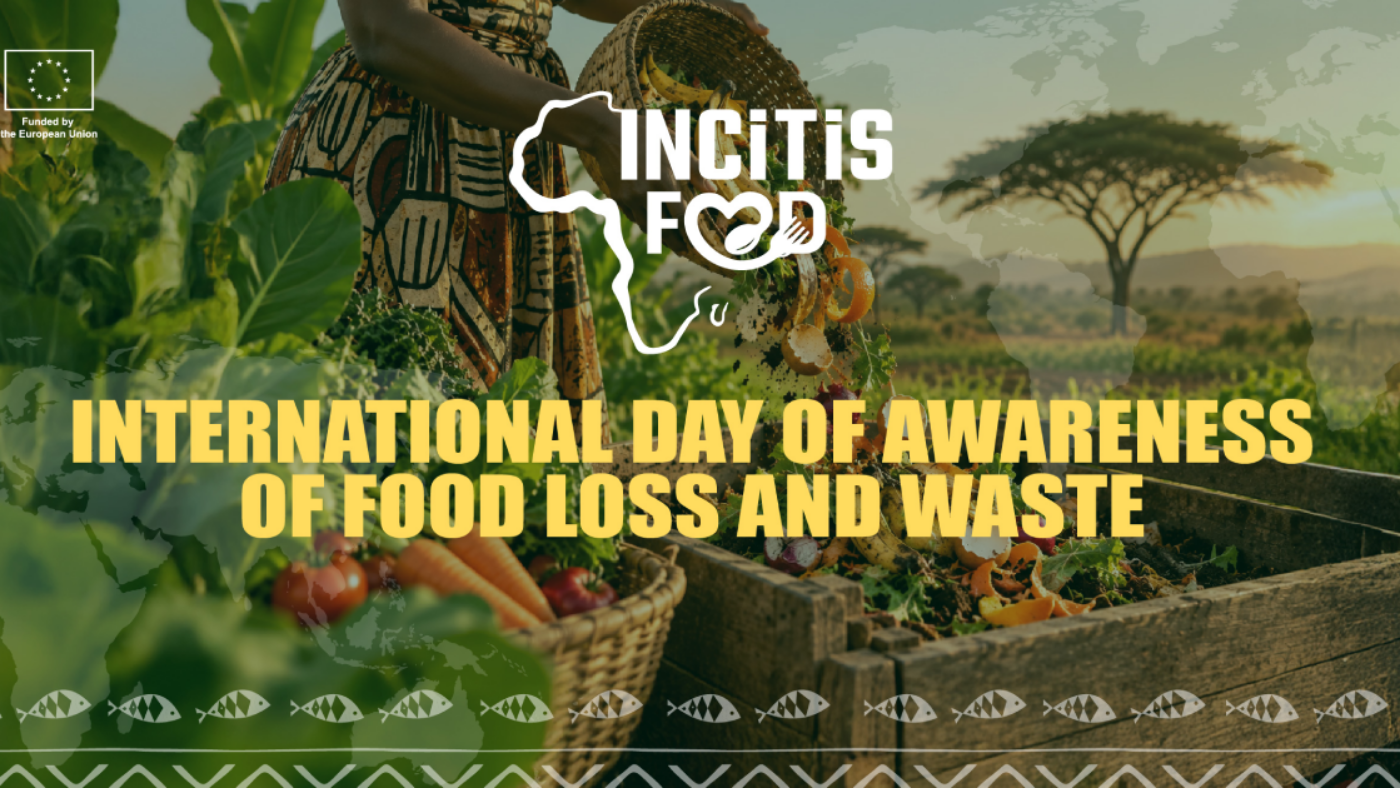
Every meal represents a journey: from the resources used to produce it to the people who grow, process, transport, and prepare it. When food is lost or wasted, the value of that entire journey is lost with it.
To mark the International Day of Awareness of Food Loss and Waste, observed annually on 29 September, INCiTiS-FOOD highlights the importance of making better use of food and the resources behind it. The 2026 theme, “Transformative Potential of Reducing Food Loss and Waste”, reflects how action in this area can improve nutrition, protect natural resources and support economic development.
A Global Observance Rooted in Sustainable Development
The United Nations General Assembly established the International Day of Awareness of Food Loss and Waste on 19 December 2019, with the first observance taking place on 29 September 2020. The day encourages awareness and collective action across the food system.
It also supports Sustainable Development Goal 12, focused on responsible consumption and production. Target 12.3 calls for halving global food waste per person at retail and consumer levels by 2030, while reducing food losses throughout production and supply chains.
Reducing Food Loss and Waste Benefits People and the Planet
Food loss and waste affect food security, livelihoods and the environment. When food goes uneaten, the land, water, energy and labor invested in producing it are also used without delivering their intended benefit. Reducing these losses helps protect resources and allows producers and businesses to retain more of the value they create.
Addressing the challenge requires participation throughout the food system. Farmers, businesses, researchers, policymakers, and consumers all have a role to play. This year’s observance emphasises the combined benefits of action: better food security and nutrition, lower environmental pressures, and improved productivity and economic growth.
The Numbers Reveal the Scale of the Challenge
Global estimates illustrate how much food is lost or wasted:
- Approximately 13% of food produced globally is lost after harvest and before reaching retail.
- An estimated 19% of food available to consumers, equivalent to 1.05 billion tonnes, is wasted at retail, food service and household levels.
- Households account for 60% of this food waste, followed by food service at 28% and retail at 12%.
The food loss and food waste estimates describe different stages of the supply chain and should not be added together. They demonstrate the need for action both before food reaches shops and after it reaches consumers.
Circular Food Systems Connect INCiTiS-FOOD to Global Action
For INCiTiS-FOOD, this observance connects directly with the project’s ambition to improve food and nutrition security in African city regions through circular agri-food technologies and practices.
The project brings together soilless crop farming, recirculating aquaculture systems and insect farming, alongside the development of inclusive business models. These approaches aim to use resources more efficiently, reduce waste and lower the environmental footprint of food production.
Through eight Living Labs across six African countries, INCiTiS-FOOD brings innovation into real-life settings, where solutions can be developed with the people who will use them. This collaborative approach connects research with local needs and creates opportunities for communities to participate in more sustainable food systems.
Reducing waste forms part of a wider effort to build food systems that make better use of resources while delivering safe, nutritious and affordable food. Circularity is central to that effort and to INCiTiS-FOOD’s approach.
As we mark this international day, we invite our partners and wider community to reflect on how food and its resources can retain their value throughout the food system. Through collaboration, knowledge sharing and locally adapted innovation, we can turn awareness into everyday action.
Follow our website for more updates.
Add a Comment