
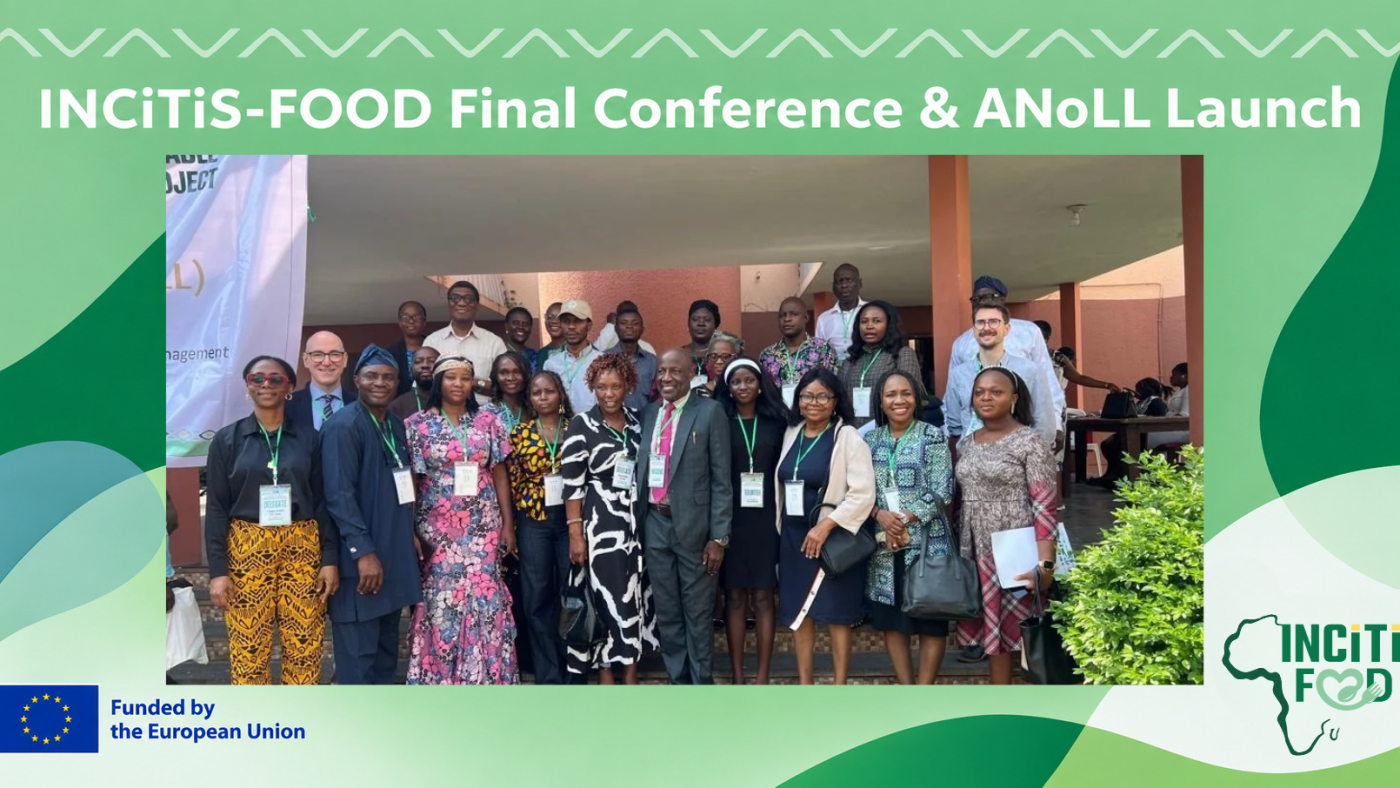
From 2 to 6 November 2026, the University of Ibadan, Nigeria, hosted the final conference of the INCiTiS-FOOD project and the official launch of the African Network of Living Labs (ANoLL). Bringing together researchers, Living Lab representatives, development partners, and other stakeholders from Africa and Europe, the five-day event provided an opportunity to reflect on four years of collaborative research, present project achievements, and establish a foundation for continued cooperation beyond the project’s lifetime.
Held under the theme “Sustainable Development in a Changing Climate: Living Lab Innovations, Food, Health and Environment”, the conference combined scientific presentations, knowledge exchange, networking, and discussions on the future of Living Labs and sustainable urban food systems in Africa.
Arrival and preparations
The first day was dedicated to the arrival of international participants in Ibadan, with transportation organised from Murtala Mohammed International Airport in Lagos. The gathering brought together representatives of the INCiTiS-FOOD consortium, African Living Labs, research institutions, and partner organisations in preparation for the conference and ANoLL launch.
Official launch of ANoLL and reflections on the INCiTiS-FOOD journey
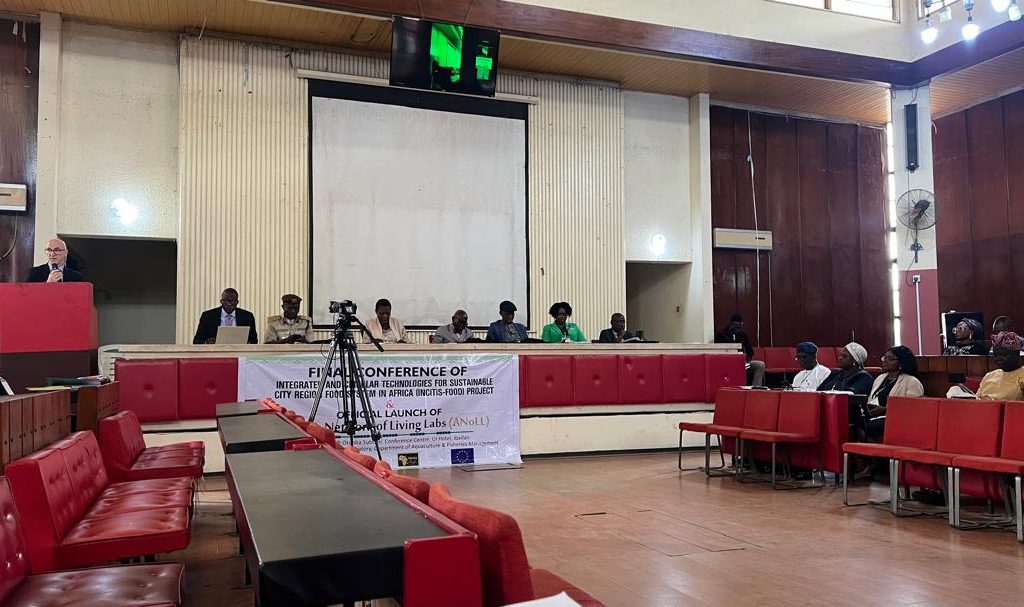
The second day marked one of the most significant milestones of the event: the official launch of the African Network of Living Labs (ANoLL), alongside the presentation of INCiTiS-FOOD achievements and discussions on the future of Living Lab cooperation across Africa.
The ANoLL Launch Workshop opened with three presentations exploring the project’s experience and the potential of the new network.
Prof. Gertrude Buchenrieder (University of the Bundeswehr Munich – UniBw M), Coordinator of INCiTiS-FOOD, presented “INtegrated and Circular Technologies for Sustainable city region FOOD systems in Africa: Our success story”, reflecting on the project’s journey, its approach, and the achievements developed through the consortium’s work.
Gabriella Quaranta, Head of Network at the European Network of Living Labs (ENoLL), introduced the “Definition and scope of Living Labs, the ENoLL concept and cooperation windows for ANoLL”. Her contribution explored the foundations of the Living Lab approach and opportunities for cooperation between the European and African networks.
The session also featured Ranka Junge and Zala Schmautz from the Zurich University of Applied Sciences (ZHAW), Switzerland, who presented “From Concept to Practice: Lessons from Eight INCiTiS-FOOD Project Living Labs in Africa”. Their presentation highlighted practical experiences from the eight Living Labs established across six African countries and the lessons learned through their implementation.
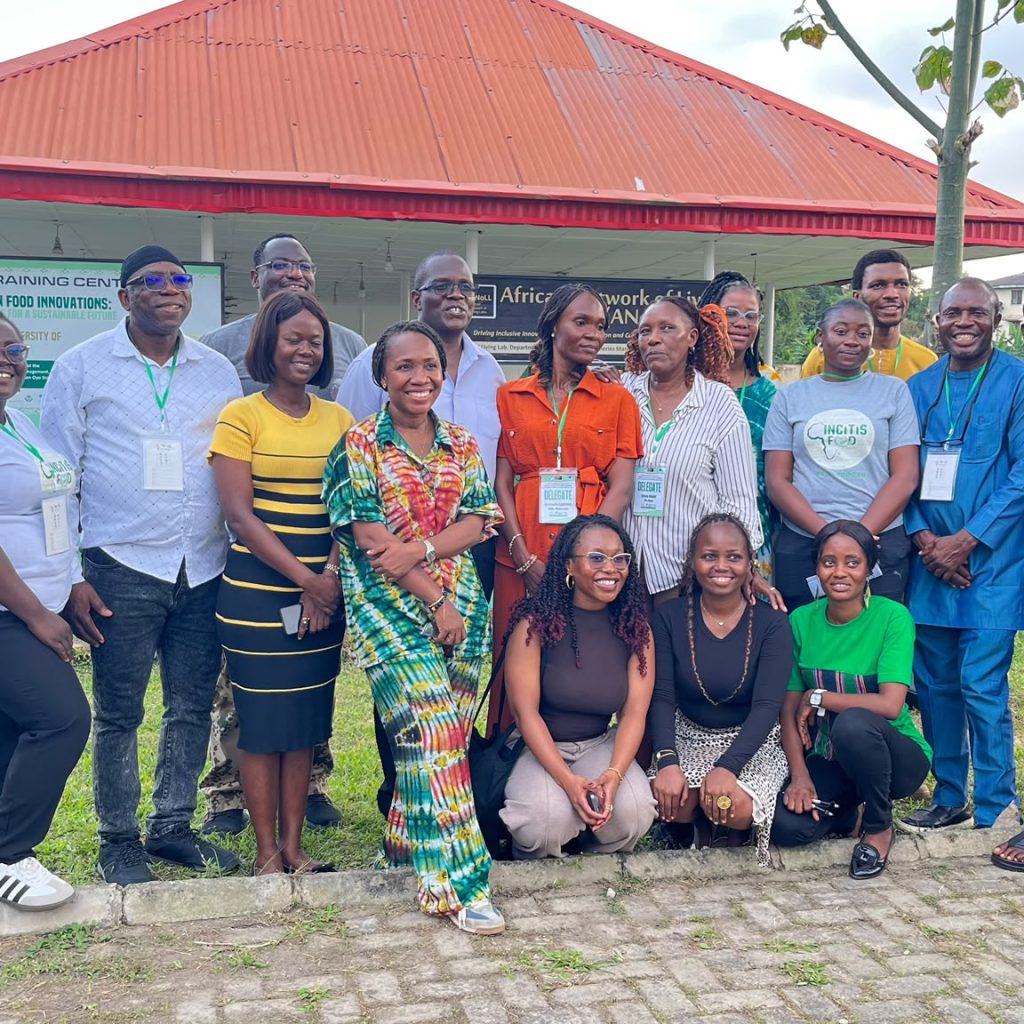
The official launch programme followed, featuring welcome addresses by the Local Organising Committee Chair, Assoc. Prof. Oyediran Olusegun Oyebola, and Thomas Ammerl, representing BayFOR, the partner responsible for the project management within INCiTiS-FOOD. A keynote speech was delivered by Emmanuel Benjamin (UniBw M), followed by goodwill messages from representatives of the University of Ibadan, the International Institute of Tropical Agriculture (IITA), and other invited guests. The official launch of ANoLL then took place, accompanied by cultural performances and a group photograph.
The afternoon continued with the second ANoLL Launch Workshop session, focusing on the network’s future role and opportunities for international cooperation.
Assoc. Prof. Oyediran Olusegun Oyebola, President of ANoLL, presented “From Concept to Context: Situating Living Labs for Resolving Complex Contexts in Africa”, discussing how the Living Lab approach can be adapted to address the specific challenges and needs of African communities.
Hans-Joerg Lutzeyer, representing EU-African Union Food Systems, explored “Cooperation support windows for sustaining Intervention initiatives in Africa”, while Thomas Ammerl (BayFOR, Germany) presented “EU-Africa Cooperation Research & Innovation”, highlighting opportunities for strengthening research and innovation partnerships between the two regions.
The day concluded with a fish barbecue featuring produce from the University of Ibadan Living Lab, offering participants an opportunity to experience local food production and continue informal discussions.
Showcasing African Living Lab experiences and research
The third day focused on the experiences and achievements of African Living Laboratories through Scientific Session A, titled “Experiences of African Living Laboratories”. The session was moderated by representatives of the University for Development Studies (UDS), Ghana.
Five presentations showcased different approaches to establishing and sustaining Living Labs and developing circular agri-food solutions:
- Aglobe Development Centre (ADC), Nigeria – Adegoke A. and Benjamin E. O. presented “Development and Setup of the Circular Agri-Food Living Lab in Lagos, Nigeria”, sharing insights into establishing a Living Lab within the Nigerian urban context.
- Bamenda University of Science and Technology (BUST), Cameroon – Balgah R.A. and Evaristus N. explored “Developing and Sustaining Living Laboratories in Africa: The Role of Commitment”, highlighting the importance of long-term engagement in maintaining successful Living Lab initiatives.
- Njala University, Sierra Leone (NUSL) – Olapade O.J. and Bangura A. presented “Unveiling the Successes of the INCiTiS-FOOD System Project in Sierra Leone: Our Story”, showcasing the country’s project experiences and achievements.
- Kenyatta University (KU), Kenya – Wamue G. presented “From Waste to Wealth: Black Soldier Fly Valorization and Aquaponics for Circular Urban Food Systems at the Kenyatta University Living Lab”, demonstrating how resource recovery and integrated production technologies can contribute to circular urban food systems.
Following the scientific session, the programme featured presentations on research funding and innovation financing. Thomas Ammerl (BayFOR) discussed European funding opportunities for research and innovation, while representatives of AFRACA explored the dynamics and mechanisms of financing innovations and SMEs in Africa.
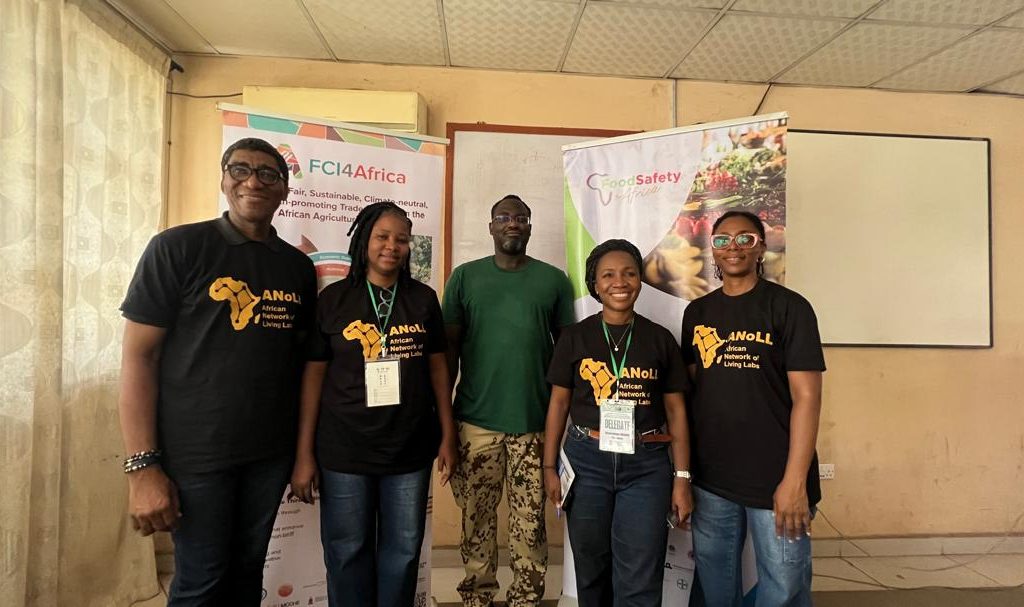
The day also included a joint side event organised by the sister projects FS4Africa and FCI4Africa, entitled “Safe Food, Secure Futures: Advancing Food Security and Well-being in Africa”. The session provided an opportunity to showcase results from their respective use cases and exchange experiences related to food safety, food security, and well-being.
In the afternoon, participants visited the National Museum of Unity in Ibadan and took part in a cultural programme, providing an opportunity to explore the local heritage and strengthen connections among conference participants.
Scientific results, technological innovations and future planning
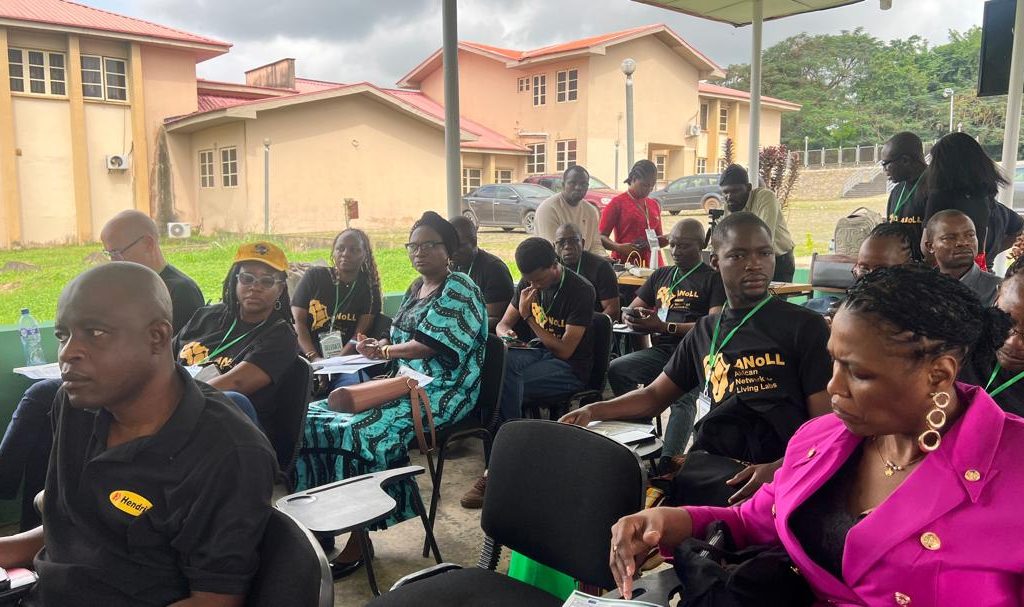
The fourth day continued with two scientific sessions, presenting research findings, technological experiments, and practical experiences from African Living Labs.
Scientific Session B, “Experiences of African Living Laboratories”, was moderated by representatives of BUST and NUSL and featured five presentations:
- UDS, Ghana – Ayamga M., Ansah I.G.K. and Abarike E.D. presented “Learning, Adapting and Co-Creating Circular Food Technologies: Experiences from the UDS Living Lab in Northern Ghana”, highlighting collaborative approaches to developing and adapting circular food technologies.
- University of Ibadan, Nigeria – Oyebola O.O., Ajiboye O.A., Adebayo O.J., Adelaja A.S., Ogundipe E.T. and Olowojuni O. explored “Circular Agrifood System in African Cities: Valorization Potentials, and Digital Innovation”, examining opportunities for resource valorisation and digital solutions in urban food systems.
- USTM, Gabon – Mboumba S., Mouketou A.M. and Dumont E. presented “The USTM INCiTiS-FOOD Living Lab: From Integrated Aquaculture Innovation to Agrifood Resilience in Franceville, Gabon”, showcasing the development of integrated aquaculture solutions and their contribution to local food system resilience.
- International Institute of Tropical Agriculture (IITA), Nigeria and Tanzania, from the sister project FoodSafety for Africa – Falade T. and colleagues presented “Living Labs Promoting Healthier Diets and Food Safety: Experiences from African Countries”, sharing experiences from Living Labs working to improve food safety and promote healthier diets.
- EGE, Kenya – Karanja Benard presented the experiences from the Egerton Living Lab as well as their research findings, such as exploring the potential of insect-based by-products as an input for sustainable vegetable production.
Scientific Session C then shifted the focus towards “Experiments/Knowledge Generation in African Living Laboratories”. Moderated by ADC, the session presented research contributions:
- NUSL, Sierra Leone – Compared growth of Amaranthus in different systems: aquaponic, hydroponic, and conventional soil-based systems.
- IITA – Researchers presented “Living Labs for Testing Food Safety Capacity Strengthening: Innovations and Advocacy in the Informal Sector”, exploring how Living Labs can support food safety capacity development and advocacy.
Together, the scientific sessions demonstrated the breadth of research conducted through the INCiTiS-FOOD Living Labs, covering integrated aquaculture, aquaponics, insect-based resource recovery, food safety, entrepreneurship, digital innovation, and circular food production.
Beyond the scientific programme, the afternoon was dedicated to the first ANoLL General Meeting and planning for the network’s sustainability. Participants discussed the next steps for the organisation, its future direction, and ways to maintain collaboration and knowledge exchange among African Living Labs beyond the conclusion of INCiTiS-FOOD.
The day concluded with a networking dinner, providing a final opportunity for participants to strengthen partnerships and reflect on the outcomes of the conference.
Looking ahead
The final day marked the departure of participants from Ibadan, bringing the five-day gathering to a close.
However, the conference represented more than the conclusion of a four-year research and innovation project. The official launch of ANoLL established a foundation for continued collaboration among African Living Labs, creating opportunities to build on the knowledge, partnerships, and experiences developed through INCiTiS-FOOD.
A legacy beyond the project
Since its launch in January 2023, INCiTiS-FOOD has brought together eight Living Labs across Kenya, Ghana, Nigeria, Cameroon, Gabon, and Sierra Leone to co-develop circular agri-food technologies and business models adapted to local needs. By bringing researchers, businesses, public authorities, and local communities together, the project has demonstrated the value of multi-actor collaboration in addressing challenges facing African urban and peri-urban food systems.
The establishment of the African Network of Living Labs represents an important step towards sustaining this work. Although initiated by INCiTiS-FOOD partners, ANoLL is intended as an open and inclusive network, welcoming other Living Labs and organisations across the African continent. Its ambition is to expand collaboration, facilitate knowledge sharing, strengthen institutional capacities, and support the development of more resilient, inclusive, and environmentally sustainable food systems.
As INCiTiS-FOOD approaches its conclusion in December 2026, the launch of ANoLL ensures that the project’s experiences and partnerships can continue to create opportunities for innovation and cooperation well beyond its funding period.
Add a Comment